

Positive reinforcement in the workplace often begins with something simple: noticing what people are doing well.
When recognition becomes part of everyday communication, teams respond differently. People collaborate more openly, share ideas with greater confidence, and feel more motivated to contribute in meaningful ways.
At Gladly Network, we’ve seen how consistent appreciation can gradually reshape workplace culture and strengthen the way people work together.
What Changes When Positive Reinforcement Works
Motivation Surges When Recognition Becomes Routine
Positive reinforcement can transform workplace motivation in measurable ways. Research from Harvard Business Review shows that employees who receive regular recognition demonstrate 23% higher engagement than those who do not. The difference often comes down to consistency and specificity. Teams that make recognition a regular practice often see motivation improve within a few months.
Recognition also creates lasting behavioral effects. When managers acknowledge specific achievements soon after they happen, employees are more likely to repeat those positive behaviors. Timely and targeted praise reinforces progress, improves morale, and helps people feel that their work truly matters.
That emotional lift is closely tied to how the brain connects recognition with overall well-being. Tools like ImpactSuite reflect this connection by supporting emotional resilience through reflection and guided wellness practices.
When organizations support both achievement and mental health, recognition becomes more than a motivational tool. It becomes a foundation for stronger engagement, healthier relationships, and more sustainable performance.
Performance Quality Jumps Through Strategic Recognition
Positive reinforcement also improves work quality by increasing focus, commitment, and clarity. Organizations that implement structured recognition programs often report stronger performance because employees better understand which behaviors and outcomes are valued.
Quality metrics improve when recognition is tied to specific skills, behaviors, and results. Teams that receive acknowledgment for performance-based contributions can reduce errors, improve consistency, and build greater confidence in their daily work. Workplaces with positive environments often achieve stronger productivity because employees feel supported and motivated to exceed expectations.
Retention Rates Strengthen With Consistent Appreciation
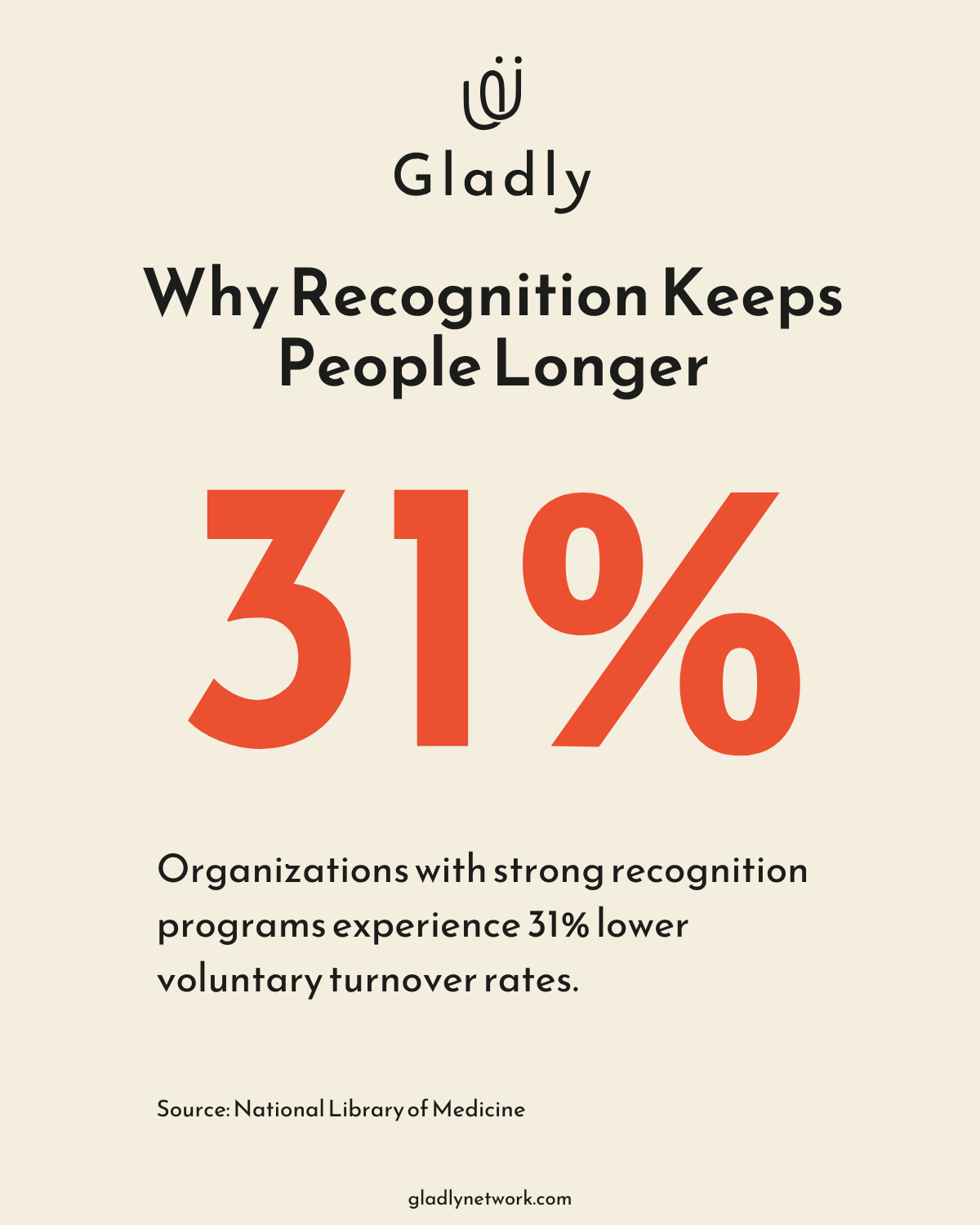
Employee turnover can decrease significantly when positive reinforcement becomes part of the workplace culture. Companies with strong recognition programs experience 31% lower voluntary turnover rates, helping reduce the high cost of replacing skilled employees.
Absenteeism can also decline when employees feel valued and appreciated. Recognition strengthens commitment, improves team accountability, and helps people feel more connected to their responsibilities. Over time, these improvements contribute to stronger satisfaction, deeper loyalty, and more stable business outcomes.
These gains create a strong foundation for effective recognition programs, but long-term success depends on using the right strategies. Recognizing small victories each day helps maintain momentum and supports a culture of continuous improvement.
Which Recognition Strategies Actually Work
Programs That Generate Results Through Peer Recognition
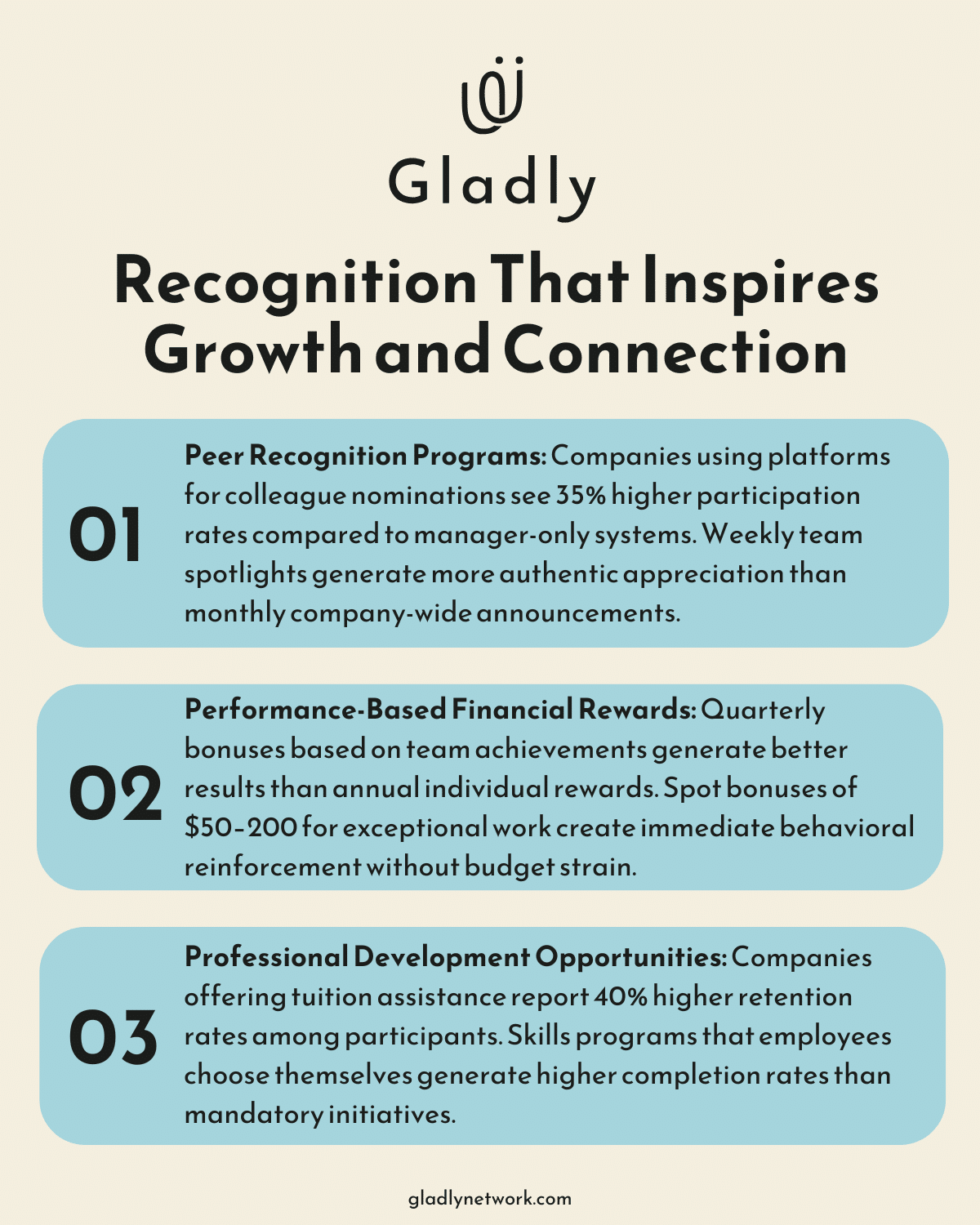
Peer-to-peer recognition programs often outperform top-down systems when it comes to engagement. Companies that give employees the ability to recognize one another frequently see higher participation rates than those that rely only on managers to deliver appreciation.
To make recognition more consistent and less dependent on chance, many organizations adopt structured systems that help teams track and share appreciation more effectively. Platforms like Motivosity support this process by giving employees simple ways to acknowledge one another while helping leaders reinforce positive habits at scale.
When peer recognition is built into the culture, teams often reduce internal competition and improve collaboration. Appreciation feels more genuine because it comes from colleagues who understand the realities of daily work and can recognize contributions in a meaningful way.
Financial Rewards That Match Performance Impact
Financial rewards are most effective when they are tied to measurable results instead of vague or overly subjective evaluations. Organizations that connect bonuses to specific outcomes often see stronger performance because expectations are clear and accountability is easier to maintain.
Research such as the work referenced by Condy, Clark & Stolovitch suggests that incentives are more impactful when they are timely and clearly connected to meaningful contributions. Quarterly rewards based on team achievements often produce better long-term momentum than annual individual rewards alone.
Even modest spot bonuses for exceptional work can create powerful reinforcement when delivered quickly. In many cases, the timing of the reward matters more than the amount. When organizations combine financial recognition with public appreciation, the effect is often stronger than money alone.
Development Opportunities That Build Long-term Value
Professional development can be one of the most meaningful forms of recognition because it supports both individual growth and organizational capability. Companies that offer learning opportunities, tuition support, or certification sponsorship often see stronger retention and engagement among employees who participate.
Development programs tend to be even more effective when employees have a voice in choosing the skills they want to build. Conference attendance, mentorship programs, and certifications all signal that the organization believes in an employee’s long-term potential.
When recognition is connected to growth, it creates value that extends beyond the immediate moment. Employee recognition and rewards programs can be especially effective when they are designed with clear goals, consistent execution, and a real understanding of what motivates people.
How Do You Build Recognition Programs That Actually Work
Start With Measurable Objectives That Drive Behavior
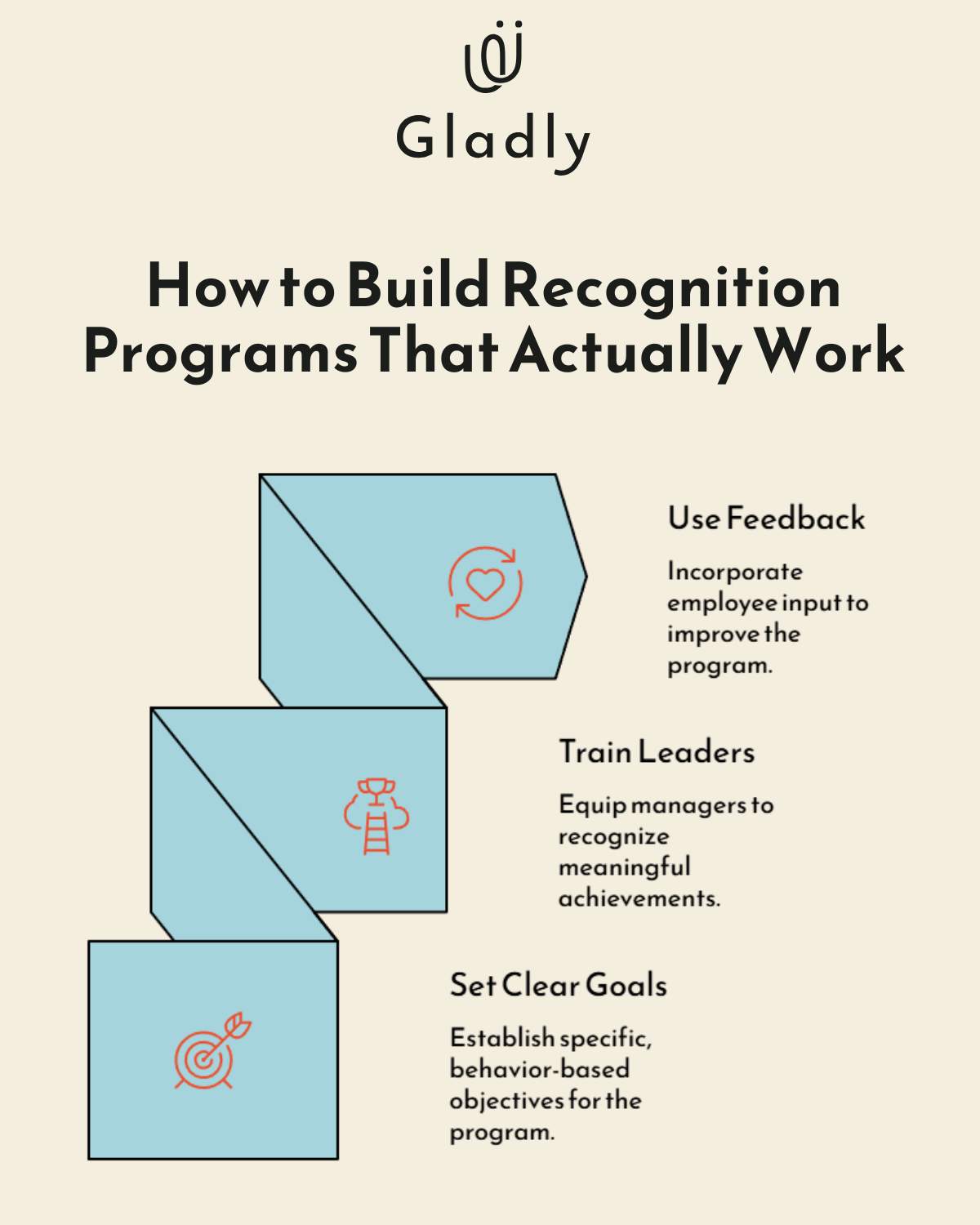
Successful recognition programs begin with clear objectives rather than general intentions. Organizations that define specific recognition triggers often see stronger participation because employees understand exactly which behaviors are being encouraged.
Recognition criteria should be tied to meaningful outcomes such as customer satisfaction, project completion, collaboration, innovation, or reliability. Setting clear goals for how often recognition should happen can also help keep appreciation from becoming inconsistent or overlooked.
When expectations are communicated early, employees and managers are more likely to trust the process. Clear standards reduce ambiguity and make recognition feel fair, relevant, and aligned with business priorities.
Train Leaders to Recognize Impact Over Activity
Leadership training plays a major role in the success of recognition programs. Companies that invest in training managers to recognize meaningful contributions often see stronger employee satisfaction and better program adoption.
Effective managers learn to recognize impact, not just visible activity. That means highlighting problem-solving, collaboration, initiative, service quality, and actions that move the team or business forward.
Specific praise is far more effective than generic praise. When leaders explain what was done well and why it mattered, recognition becomes more credible and more likely to reinforce positive behavior. Ongoing coaching can help managers improve how they deliver appreciation and sustain consistency over time.
Track Program Effectiveness Through Direct Employee Input
Employee feedback is essential for improving recognition programs. Organizations that regularly gather input can identify what is working, what feels inconsistent, and where managers may need more support.
Pulse surveys, anonymous feedback, and regular team check-ins can help measure how often recognition is happening, whether it feels fair, and how much it affects motivation. Programs tend to perform better when employees can share their preferences and influence how recognition is delivered.
Direct measurement leads to better decisions than assumptions. Research from O.C. Tanner suggests that the likelihood of attrition decreases when employees receive regular recognition, including at least one nomination per month. Organizations that adapt their programs based on employee responses are more likely to build recognition systems that remain effective over time.
Recognition That Comes Full Circle
Positive reinforcement in the workplace is about creating a culture where appreciation becomes natural, consistent, and meaningful. When recognition flows freely, people often show up with more empathy, energy, and purpose. Small moments of gratitude can create changes that last well beyond a single project or deadline.
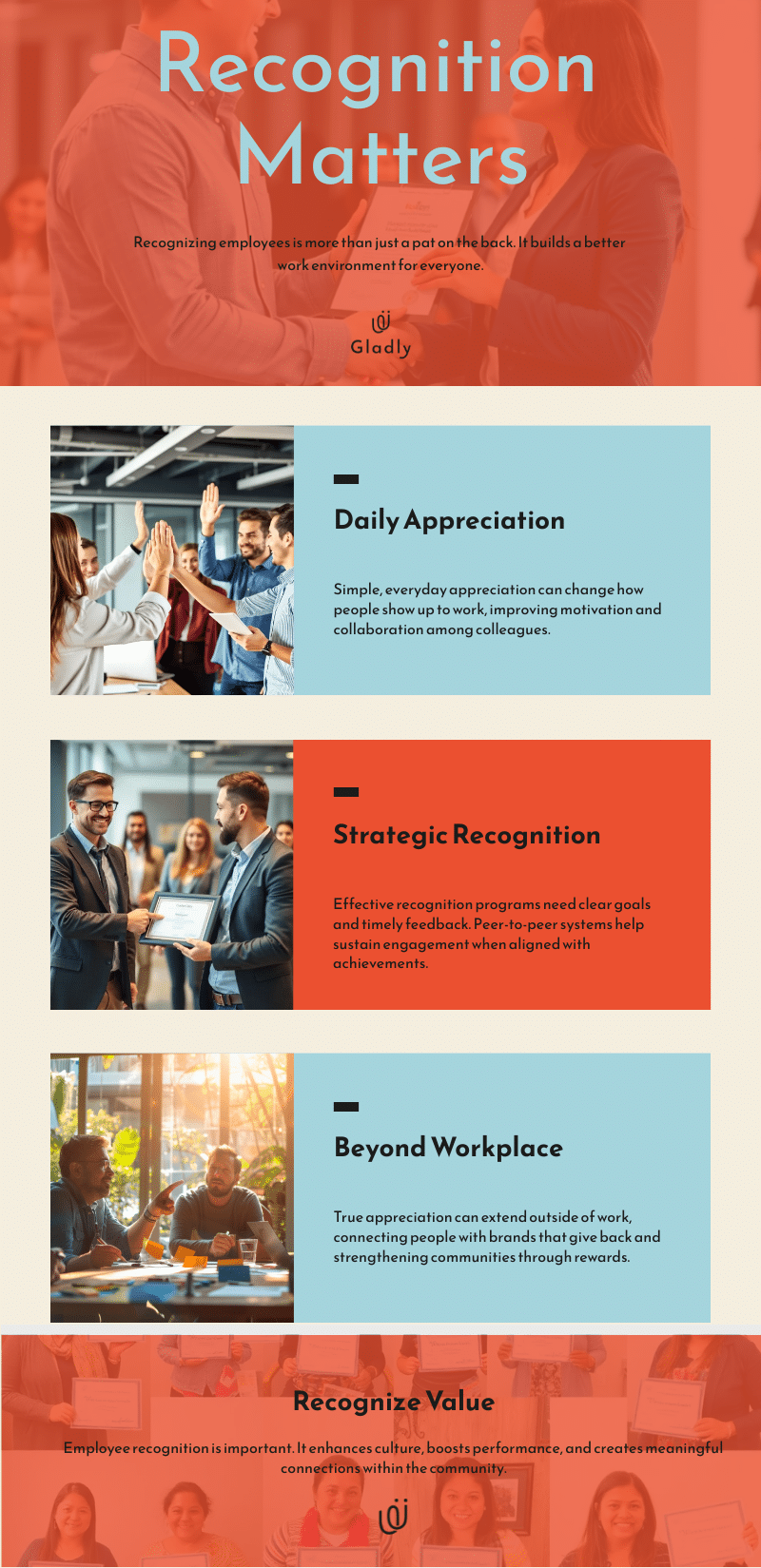
At Gladly Network, we believe recognition should extend beyond the workplace. Our platform connects people and companies to brands that give back, offering rewards and discounts that celebrate positive action. Each purchase, like each expression of appreciation, helps strengthen the connections that make communities thrive. When we recognize value in people, purpose, and everyday choices, good has a way of coming full circle.