

Open your pantry right now and take an honest look. Chances are, you’ll find half-eaten bars, bags of kale chips from three months ago, protein snacks that sounded perfect in the store but taste like cardboard in practice. You keep buying “healthy” snacks with genuine intention, but somewhere between purchase and actual eating, something breaks down. This isn’t about discipline or willpower. It’s about the fundamental disconnect between what sounds good when you’re shopping and what you actually want when you’re hungry.
The Gap Between Good Intentions and Real Habits
When Aspirational Snacking Meets Reality
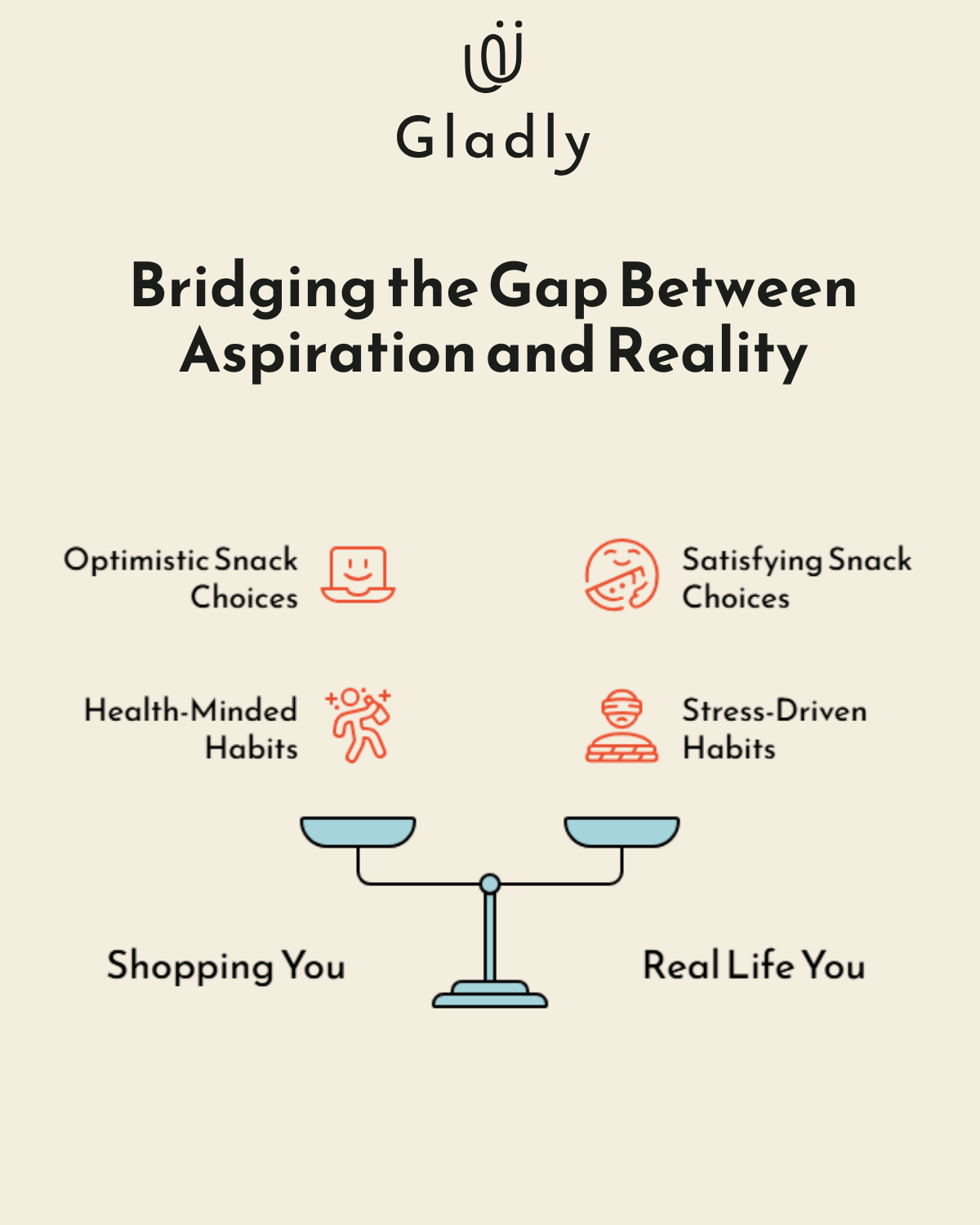
There are two versions of you making snack decisions. Shopping You is motivated, health-conscious, imagining the version of yourself who meal-preps and makes perfect choices every time. You see words like “superfood” or “plant-based protein” on a package and think, yes, this is exactly who I am. This is the person I’m becoming.
Then real life happens. You’re tired after a long day, hungry between back-to-back meetings, or stress-eating on deadline. That aspirational snack doesn’t hit right. The texture feels off, the flavor doesn’t satisfy, or it just doesn’t match what your body is actually asking for in that moment. So it sits there, taking up space in your pantry, making you feel a small pang of guilt every time you see it and reach for something else.
The Pantry Graveyard Effect
Most people recognize this pattern but don’t talk about it: the slow accumulation of barely-touched “healthy” snacks gathering dust. Each one represents a small failure of prediction. You thought you’d like it, thought you’d eat it regularly, thought this would finally be the snack that stuck and became part of your routine.
This is about the psychological weight of repeatedly buying things that don’t work for you, then blaming yourself instead of questioning whether these products were actually designed for real human eating patterns or just for aspirational marketing moments.
What Makes You Actually Reach for a Snack Again
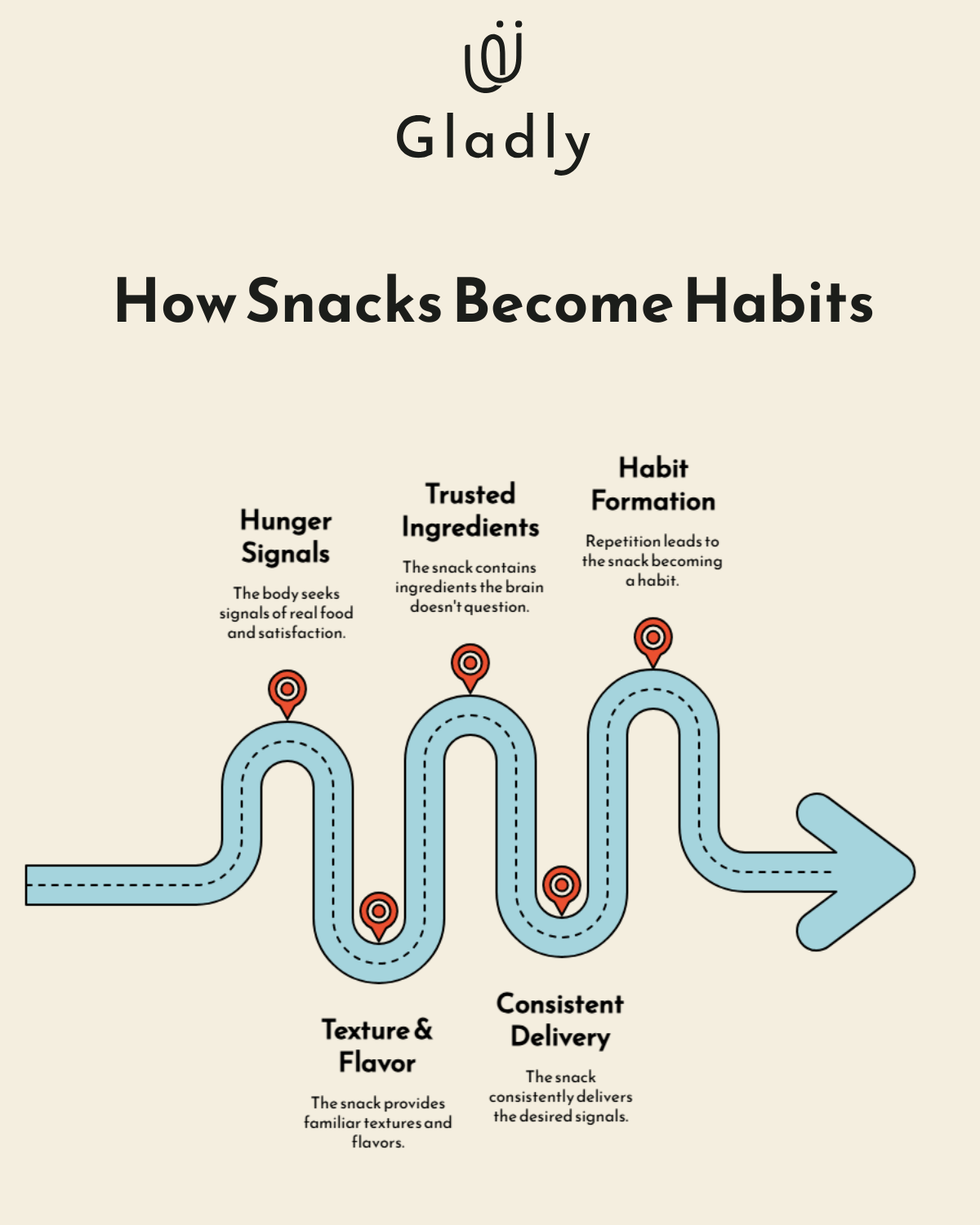
So what separates the snacks you finish from the ones you forget about? It’s rarely the nutrition facts or health claims printed on the package. It’s a handful of practical factors that matter more in the actual moment of eating than they ever do when you’re reading labels in a store.
The Reorder Test
Here’s the simplest measure of whether a snack actually works for you: would you buy it again without hesitation? Not “should I buy it again because it’s technically healthy,” but “do I genuinely want to buy it again because I enjoyed it and it fit into my actual routine.”
The snacks that pass this test share certain qualities. They don’t require you to be in the right mood or mindset to enjoy them. They taste good enough that eating them feels like a choice you’re making, not a health assignment you’re completing. And they’re simple enough that you’re not questioning ingredients or second-guessing the decision afterward.
This is where something like Amäzi Foods distinguishes itself from the pantry graveyard. Organic dried mango or pineapple with zero added sugar isn’t trying to be anything other than fruit. There’s no flavor fatigue because you’re eating something your taste buds already understand and don’t get tired of. People reorder because they actually want to eat it again. That’s the real difference between a one-time purchase and a genuine habit.
Texture and Satisfaction Signals Your Body Recognizes
Pay attention to what you actually reach for when multiple options are sitting in front of you. Chances are, it’s something with a texture you find satisfying—chewy, crunchy, something that requires a bit of work to eat. Texture signals to your brain that you’re eating real food, not just consuming calories to check a box.
Flavor matters too, but not in the way marketing departments suggest. You don’t need “exciting” or “innovative” flavor combinations. You need flavors that register as food—sweet that tastes like actual fruit, savory that tastes like recognizable ingredients, not lab-designed taste profiles that hit hard on the first bite and then feel synthetic on repeat.
Some people recognize that consistent snacking is just one piece of supporting their bodies through busy days. They pair their go-to snacks with daily essentials that round out their nutrition baseline without adding complexity. Root’d Hydrating Multivitamins, for example, offer simple, consistent support that works alongside the snacks you’re already eating—not as a replacement for getting your food choices right, but as complementary reinforcement for real routines.
Recognizing Your Actual Snacking Patterns
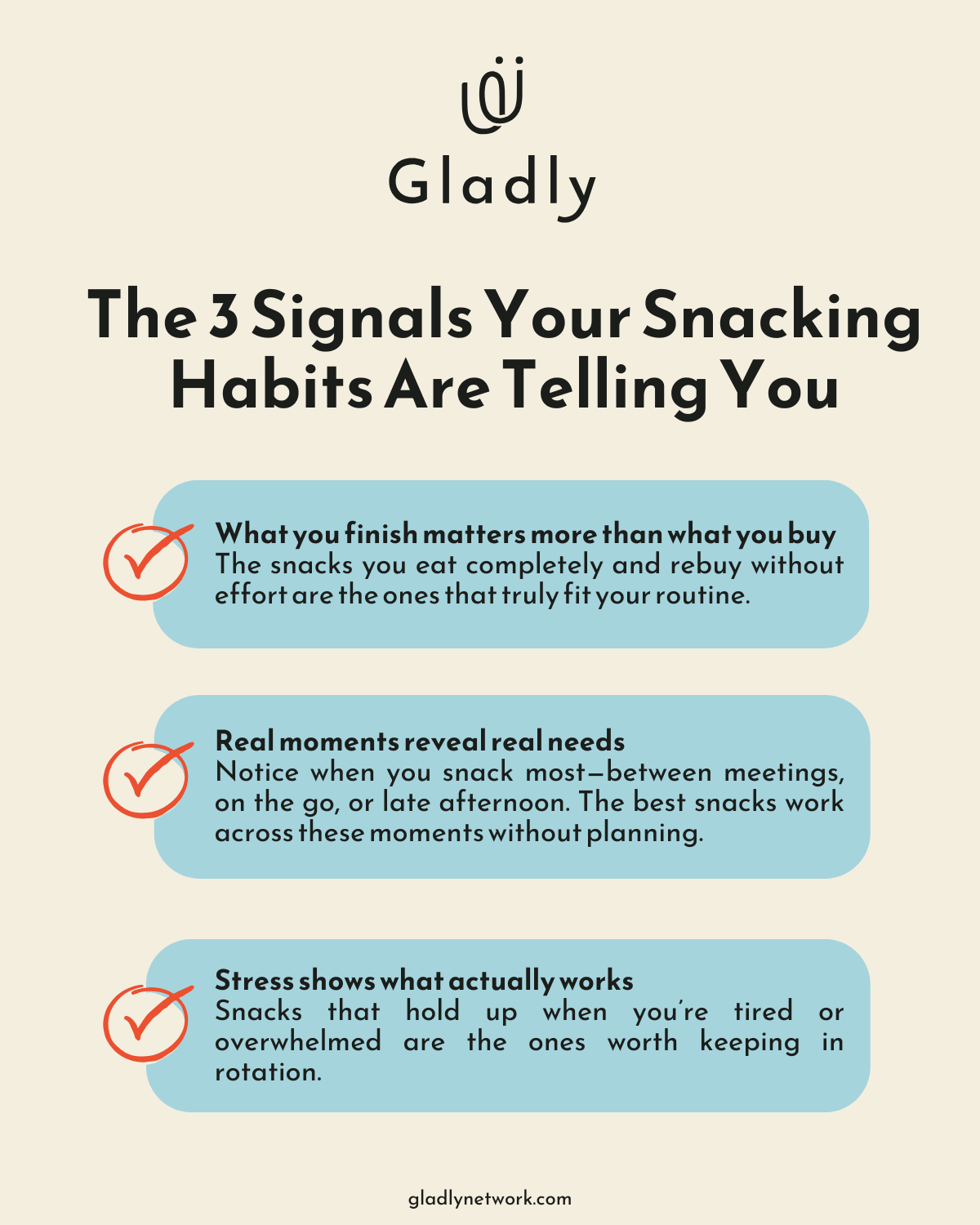
Once you start paying attention to what you actually finish versus what you abandon, patterns emerge quickly. Your real snacking habits—not the ones you wish you had—reveal what genuinely works for your body, schedule, and preferences.
When and Where You’re Really Eating
Think about the specific moments when you actually need a snack. Mid-morning slump at your desk. Post-workout in the car before you’ve even made it home. Late afternoon before dinner prep when your energy is bottoming out. Travel days when meals get skipped or delayed. Each context has different requirements, and the snacks that work brilliantly in one situation often fail completely in another.
The snacks you keep coming back to are usually the ones that work across multiple scenarios without forcing you to think too hard. They don’t melt in your bag, don’t require utensils or napkins, don’t make you feel sluggish or wired afterward. They fit into the gaps in your day without requiring you to plan your entire schedule around them.
This versatility is part of why Amäzi’s approach resonates with people who actually finish what they buy. Dried fruit travels indefinitely, doesn’t require refrigeration, works whether you’re eating it at your desk or halfway through a hiking trail. It’s not optimized for one idealized snacking moment—it’s reliably useful across the messy reality of your actual life.
What Your Body Asks for Under Stress
Notice what you reach for when you’re genuinely stressed, exhausted, or dealing with a disrupted routine. Aspirational snacks often fail this test spectacularly—they’re designed for your best days, not your hardest ones. The snacks that earn permanent space in your rotation are the ones that still work even when you’re not at your best.
Some people recognize they need more than just better snacks when stress runs high—they need targeted support that addresses what’s actually driving the craving or energy dip in the first place. HelloHealth Drops & Capsules are formulations designed specifically for immunity, sleep, or stress support when your baseline nutrition needs reinforcement beyond food alone. They’re not replacing good eating habits, just filling in the gaps that snacks can’t address on their own.
Building a Rotation You’ll Actually Use
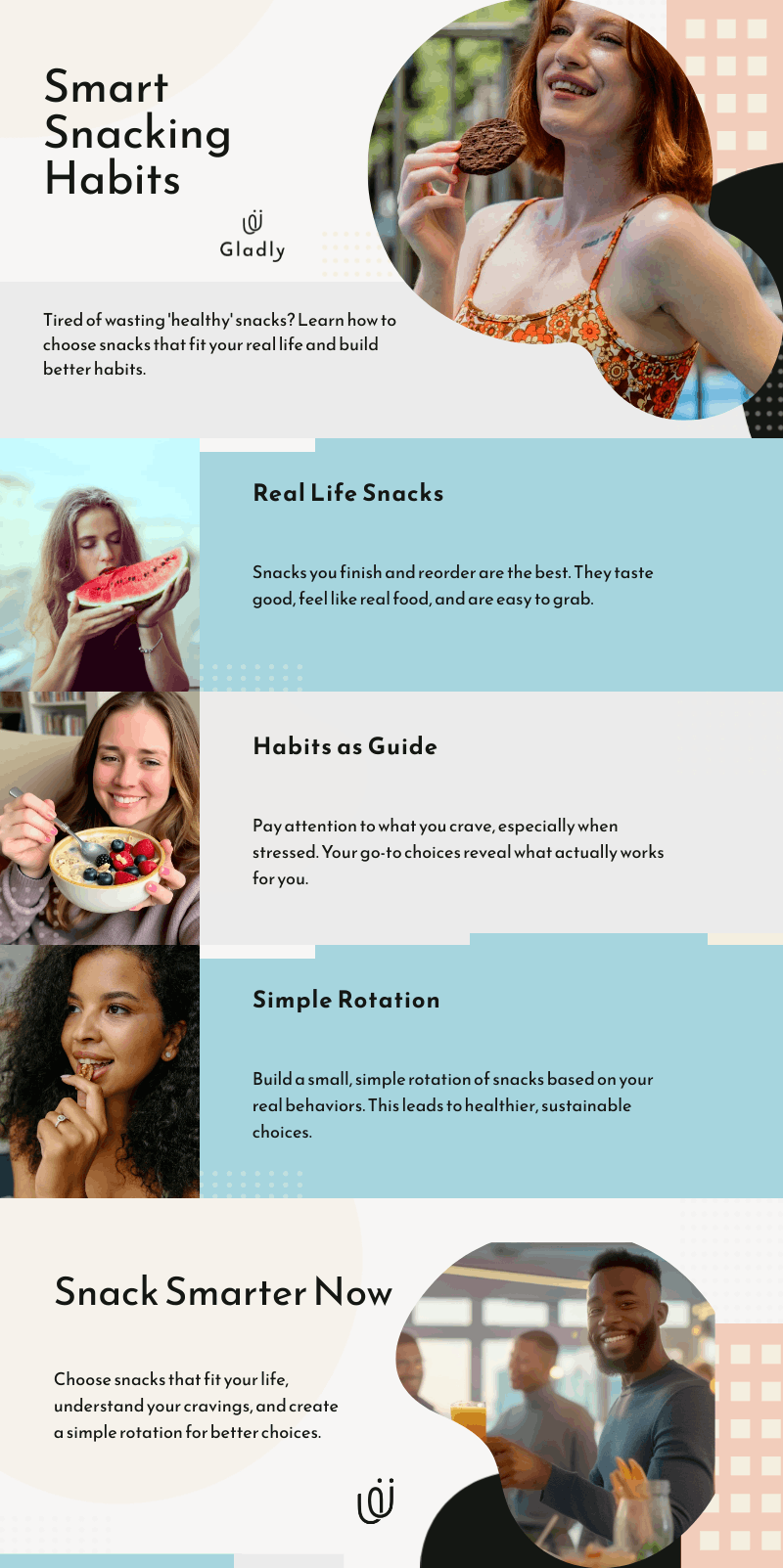
The goal is to build a small rotation of options you genuinely like and will actually finish—snacks that earn their spot in your pantry through repeated use, not through aspirational purchasing or impressive marketing claims.
Start by auditing what you already have. What’s been sitting untouched for months? Be brutally honest about why. Is it the taste? The texture? The fact that it requires the right mood or moment to enjoy? Then pay attention to what you consistently run out of and need to restock. Those patterns are your real answers, not the ones you think you should have.
Look for simplicity in both ingredients and decision-making. The fewer mental hoops you have to jump through to feel good about eating a snack, the more likely you are to actually eat it. Short ingredient lists you can read without stumbling. Recognizable components. Brands that don’t require you to decode marketing language or question sourcing practices.
At Gladly, we focus on products people actually use, not just buy once and forget. Our marketplace brings together brands built for real routines and repeat purchases—the kind of everyday choices that stick because they genuinely work, not because they sound impressive. Joining is free, and you’ll find options designed to fit into the life you’re already living, not the one you’re aspiring to live someday.
The best snack isn’t the one with the most impressive label or the longest list of functional benefits. It’s the one you reach for without thinking, finish without effort, and reorder without hesitation. Trust what your actual behavior tells you, not what you think you should want.