
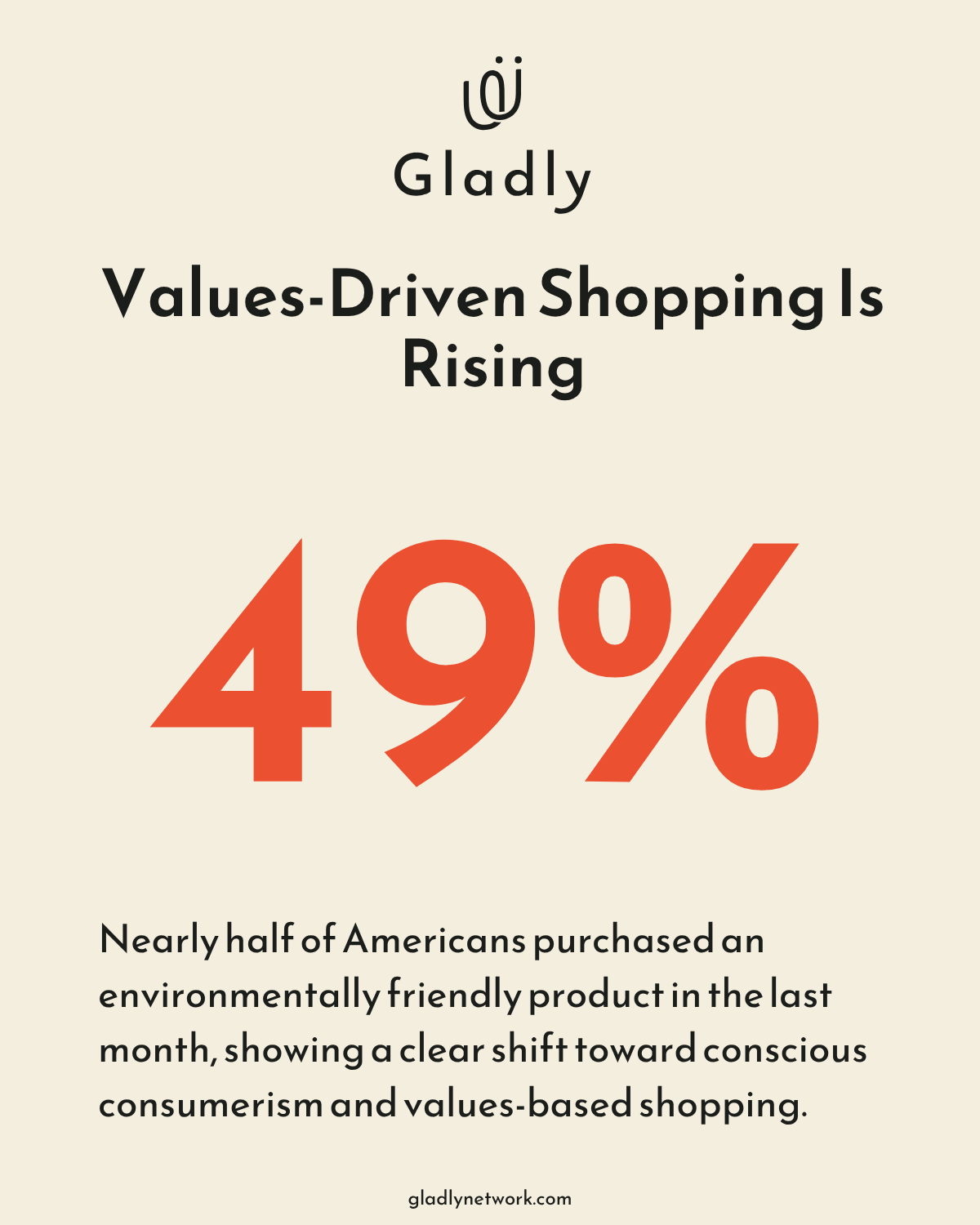
Conscious consumerism is the practice of aligning your purchases with your values. It’s not about perfection or transformation — it’s about making thoughtful choices when you can, where you can. Nearly half of Americans (49%) purchased an environmentally friendly product in the last month, up from 43% in August 2024, according to GlobeScan’s 2025 consumer research. That six-point jump signals something real: people want to shop differently, and they’re acting on it.
But here’s the other side of the story. More than one-third of those same consumers wanted to buy a sustainable product but couldn’t find one, didn’t know where to look, or felt priced out. That gap between intention and action is where conscious consumerism lives — and where clarity matters most.
At its core, this approach asks a simple question: does this purchase reflect what I care about? The answer doesn’t have to be complicated.
The Shift From Transactions to Values
Shopping used to be straightforward. You needed something, you bought it, and that was that.
Why Shopping Feels Different Today
Today, the decision feels bigger. Consumers are asking where products come from, who made them, and what happens after they’re used. Ethical purchasing and purpose-driven brands have moved from the margins to the mainstream, and the data backs it up.
According to GlobeScan, 49% of Americans purchased an environmentally friendly product in the last month — a meaningful increase from 43% just months earlier. That’s nearly half the country actively choosing products based on values, not just function or price. Another 36% wanted to make that choice but faced barriers like cost, limited availability, or lack of awareness. Only 15% said they had no interest in sustainable products at all.
The Rise of Values-Based Decisions
What this tells us is that conscious consumerism isn’t a trend for a select few. It’s a shift happening across demographics, income levels, and categories. People are voting with their wallets, and they’re looking for brands that make it easier to do so.
The rise of purpose-driven brands reflects this change. These companies don’t just sell products — they share their missions, their supply chains, and their commitments. Transparency isn’t a nice-to-have anymore. It’s expected.
Three Principles That Define Ethical Purchasing
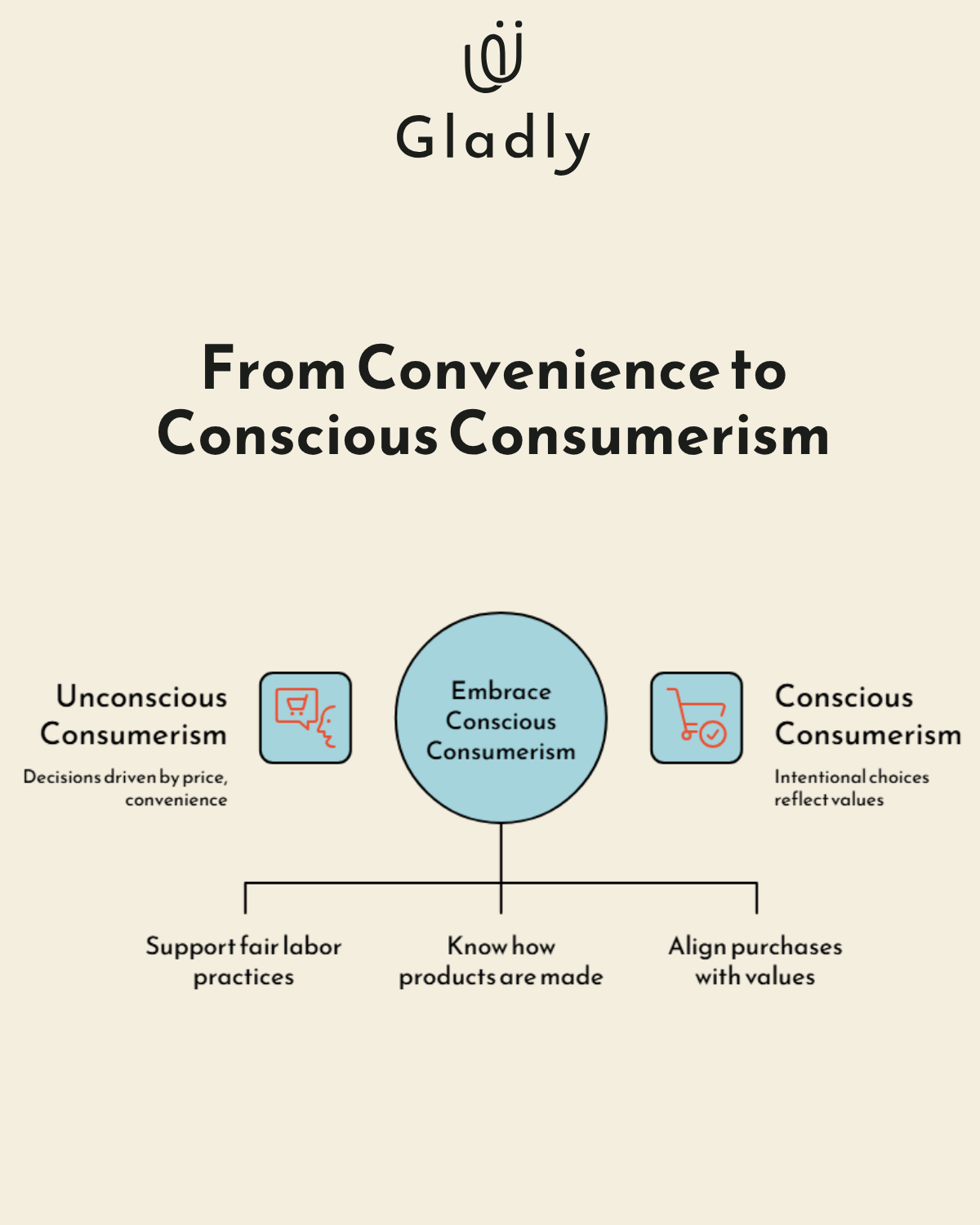
So what does ethical purchasing actually look like in practice? It comes down to three core principles: transparency, purpose, and community.
Transparency Builds Trust
Transparency means knowing what you’re buying. Ingredients, sourcing, labor practices — these details matter. Brands that share this information openly earn trust. Those that don’t often lose it.
Purpose is about intention. Purpose-driven brands are built around a mission that goes beyond profit. They give back, support communities, or prioritize sustainability in ways that are clear and measurable. Small acts of kindness in everyday choices add up to something bigger.
Purpose Creates Connection
Community is the connective tissue. Conscious consumers aren’t shopping in isolation — they’re part of a movement. They want to support brands that reflect shared values and connect them to others who care about the same things.
Before, shopping meant buying what’s on sale. Now, it means buying what aligns with your values. That’s the shift, and it’s reshaping retail from the ground up.
Brands like Andar embody this approach. Andar crafts minimalist, handmade goods built to last — designed for those who live with intention. It’s not about flash or trends. It’s about longevity, craft, and living with less but better.
How Purpose-Driven Brands Earn Loyalty
Loyalty used to mean points and percentage-off codes. Today, it means something deeper. In Anna Lappé words: “Every time you spend money, you’re casting a vote for the kind of world you want.”
Beyond Discounts and Points
According to Forbes research on 2025 consumer trends, nearly 90% of consumers still want financial rewards, but 85% also expect free shipping, and 70% want early access to new products and sales. More importantly, they want to feel seen — not just as customers, but as people.
Loyalty has moved from points to purpose — and that’s where Gladly comes in. Purpose-driven brands don’t win by discounting. They win by offering recognition, access, and a sense of belonging. When a brand’s mission aligns with your values, the relationship goes beyond transactions. You become an advocate, not just a buyer.
Loyalty Through Shared Values
This shift is especially clear among younger consumers. They’re willing to pay more for brands that stand for something, and they’re vocal about it. But it’s not generational — it’s cultural. Across age groups, people are choosing brands that make them feel good about their choices, not guilty about what they’re not doing.
The brands that thrive in this environment are the ones that make values visible. They don’t hide their supply chains or dodge tough questions. They invite customers in, share their stories, and build communities around shared priorities.
That’s the promise of conscious consumerism: your choices matter, and the brands you support reflect what you believe.

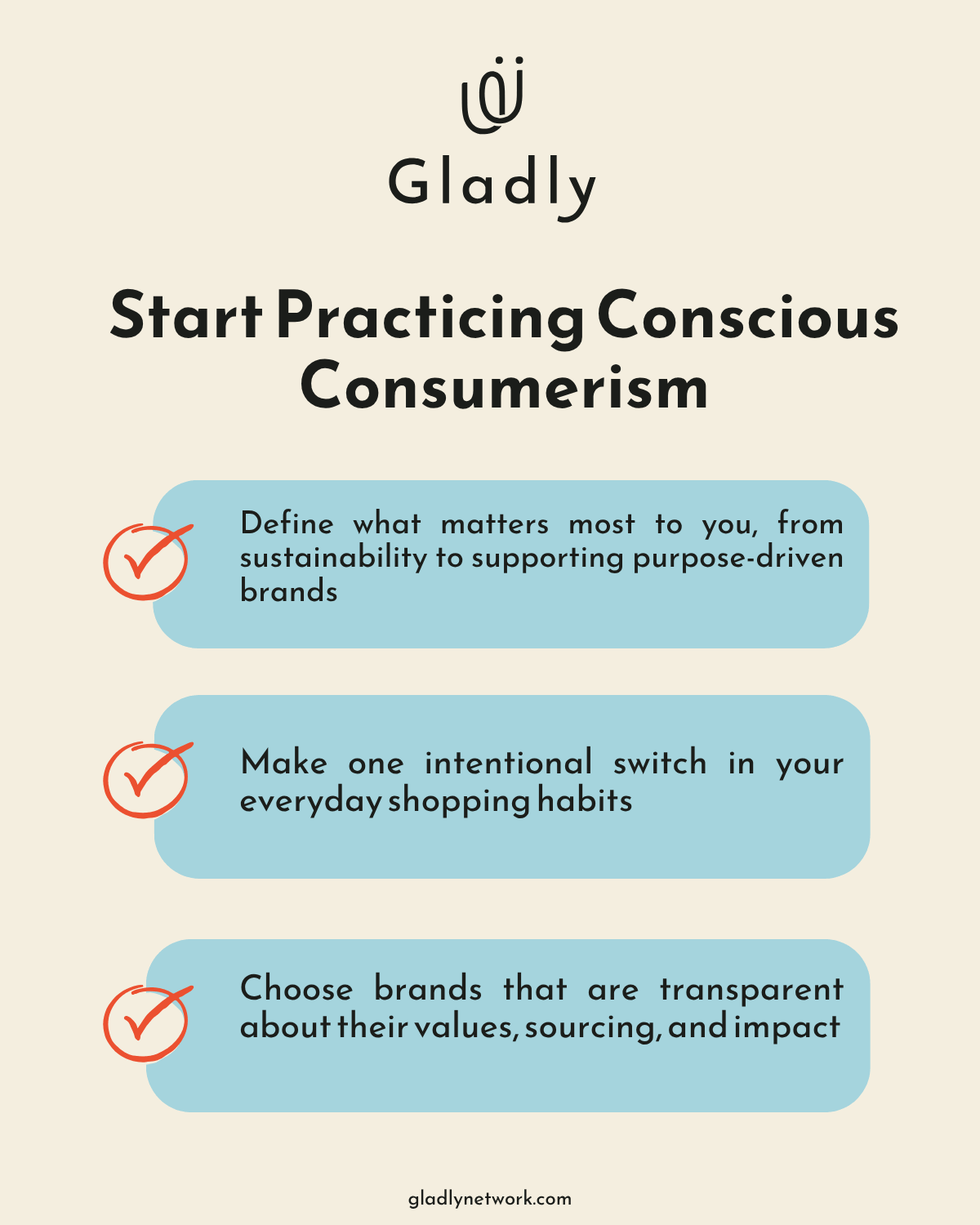
Conscious consumerism doesn’t require a complete lifestyle overhaul. It starts with one decision, one category, one brand at a time. Here’s how to begin:
☑ Define what matters most to you — sustainability, social impact, transparency, or all three
☑ Start with one category — home goods, beauty, wellness, or everyday essentials
☑ Explore brands curated by real Gladly Voices — people who use and trust these products
☑ Let your purchases reflect your priorities — progress over perfection, always
Ready to explore brands that reflect what you value? Browse Gladly Shop — where purpose-driven products meet your everyday needs.