

Black History Month workplace culture shows up every February with the same energy: panels, posts, and promises. Then March 1st hits, and it’s back to business as usual. Baby, that math don’t math. Because your Black employees? They’re here in April. In July. In November. And they’re watching to see if you meant what you said, or if it was just another performance.
I’m not here to lecture. I’m here because I’ve been in rooms where the February script gets read out loud, and I’ve also been in rooms where people are too tired to pretend anymore. So let’s talk about what it looks like when Black History Month stops being a moment and starts being a mirror.
The February Script We All Know
The Posts and Panels
February rolls around, and the calendar fills up fast. There’s a guest speaker. An employee resource group meeting. Maybe a book club or a documentary screening. Social media gets its moment too, quotes from leaders, hashtags, maybe a carousel post about trailblazers. It’s all well-intentioned. It’s all very visible.
And here’s the thing: visibility matters. Recognition matters. But when it’s only visible in February, people notice. Your Black employees notice. Your Black customers notice. Because they’ve seen this script before.
What Happens March 1st
The panels end. The posts stop. The energy shifts back to normal operations. And “normal” is where the real work lives, or doesn’t. Normal is who gets promoted. Normal is whose ideas get heard in meetings. Normal is how your customer service team talks to a Black customer on the phone versus how they talk to everyone else.
If February was the highlight reel, March is the daily footage. And that’s where people decide whether you were performing or practicing.

What Your People Are Seeing (That You’re Not)
Inside Your Team
Your Black employees are code-switching before they even clock in. They’re calculating how to wear their hair, how to speak, how much of themselves they can bring into the building without being labeled “too much” or “unprofessional.” They’re watching who gets coaching and who gets written up for the same mistake. They’re tracking promotion patterns and wondering why the pipeline to leadership looks so different at the top than it does at the entry level.
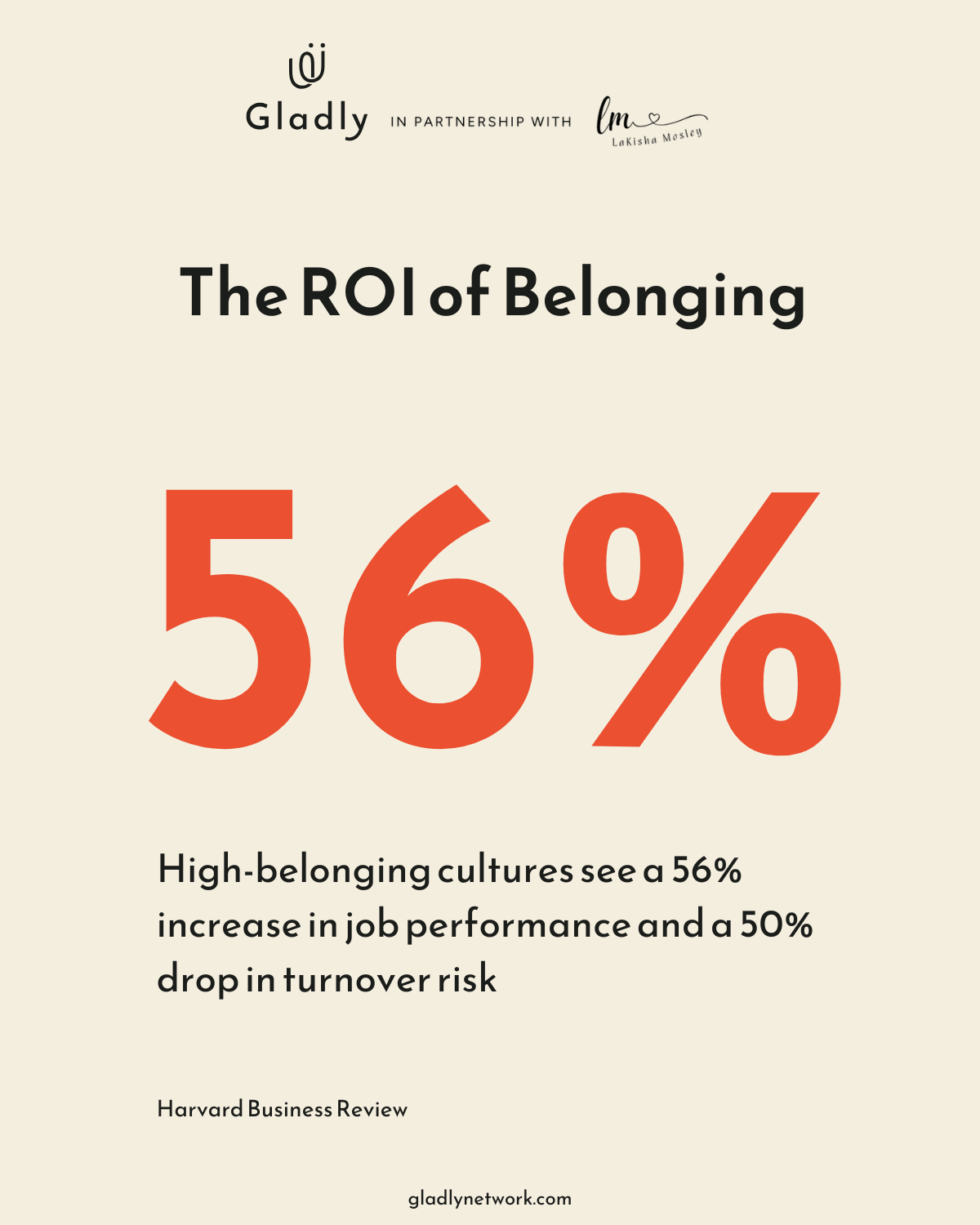
And when psychological safety isn’t present, they stay quiet. They manage their own mental health off the clock because they don’t trust that speaking up will lead to support instead of retaliation. Mental health is the foundation. Period. Research shows that high belonging scores can lead to a 56% increase in job performance and cut turnover risk by half. If your culture doesn’t make space for honesty, you’re asking people to break themselves to fit.
Inside Your Customer Experience
Your Black customers are carrying their own set of calculations. They’re being watched a little longer in retail spaces. Their payment methods are questioned a little faster. Their tone gets read as “aggressive” when a white customer saying the exact same thing gets read as “assertive.” These aren’t outliers. These are patterns. And patterns don’t show up in one month; they show up in every interaction.
When your team hasn’t been trained to recognize bias, they replicate it. When your policies don’t account for how different customers experience your brand, you end up serving some people well and others poorly. And trust me, people know the difference.
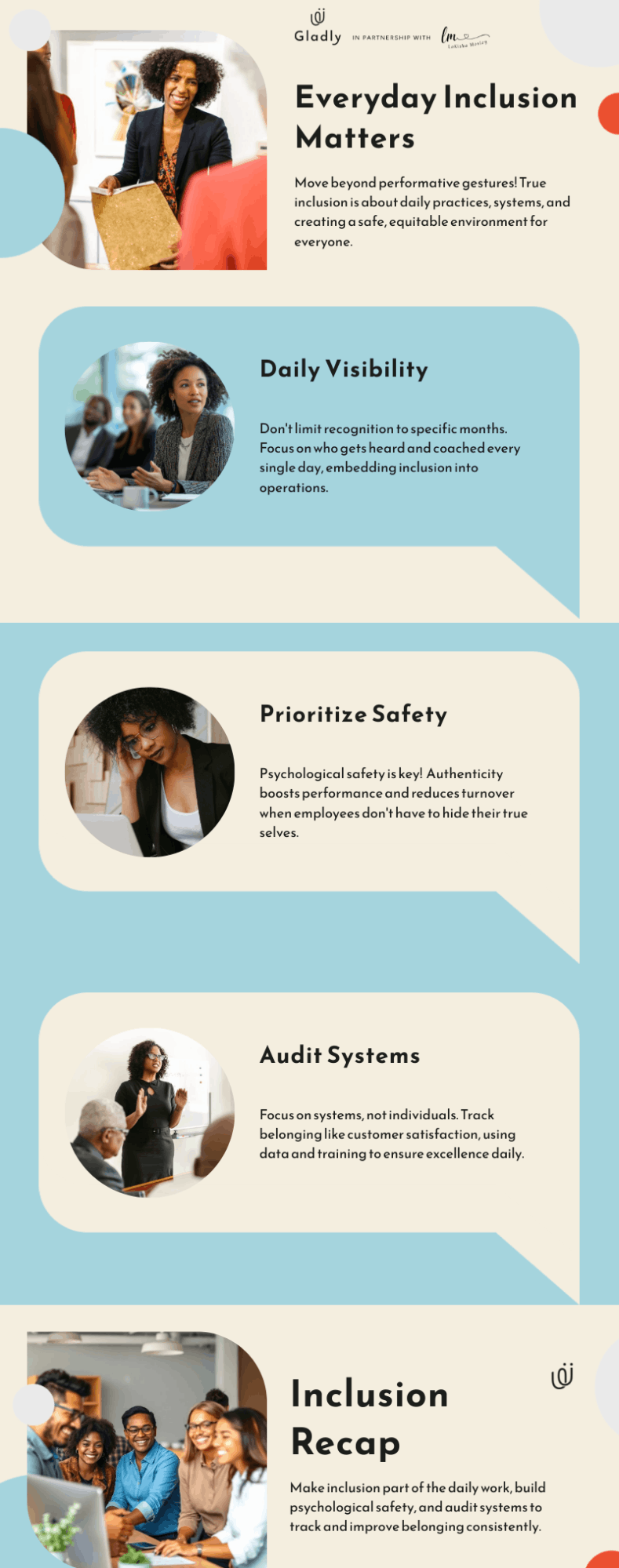
Psychological safety and belonging drive retention, innovation, and team performance, but only when they’re practiced daily, not performed annually.
How to Build a Year-Round Practice
Start With What You Can Control
You don’t need a task force to start. You need honesty. Look at your hiring data from the last year. Look at who got promoted, who got coaching, who got let go. Look at your customer complaints and ask: are there patterns in who’s filing them and what they’re about? Look at your employee surveys and ask: do your Black employees feel as safe and supported as everyone else?
Understanding systemic racism requires you to see the system, not just the individuals in it. So audit the system. Not to shame anyone, but to know where the gaps are.
Then act. Train your managers on cultural competence, not once in February, but monthly. Build mentorship programs that actually connect Black employees to sponsors with decision-making power. Review your “professionalism” standards and ask whether they’re neutral or whether they’re just centering dominant culture norms. Partner with Black-owned businesses in your supply chain. Make belonging a metric you track just like you track customer satisfaction.
Review your ‘professionalism’ standards and ask whether they’re neutral or whether they’re just centering dominant culture norms. Partner with Black-owned businesses in your supply chain. You can even use tools like Motivosity to make belonging a metric you track just like you track customer satisfaction.”
Make Belonging Measurable
Here’s what practice looks like versus performance:
Performance: A panel discussion and social media posts
Practice: Monthly cultural competence training and equitable promotion pathways
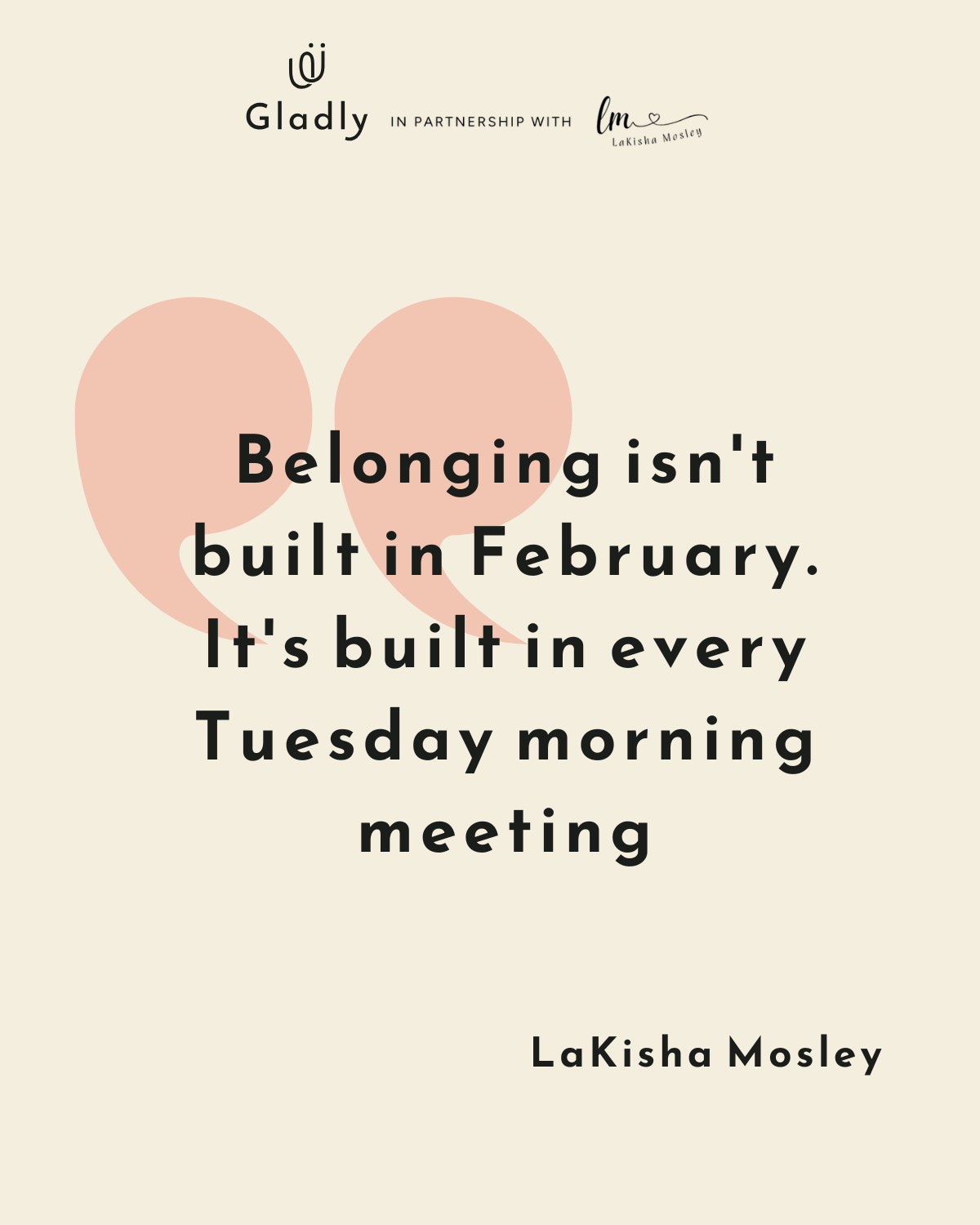
Belonging isn’t built in February. It’s built in every Tuesday morning meeting, every promotion decision, every policy you write.
So measure it. Survey your team. Ask Black employees specifically what they need, and then act on it. Track retention rates. Track promotion rates. Track who’s leading projects and who’s getting development opportunities. If the data shows gaps, close them. That’s the work.
I said what I said.
February Should Be Your Starting Line
Black History Month should be the match, not the fire. It should remind you to look at what you’re building the other eleven months. Because your people, the ones on your team and the ones you serve, they’re not going anywhere. And neither is the work.
Here’s where to start:
- Review your last 6 months of hiring and promotion decisions
- Ask Black employees what they actually need, then act on it
- Schedule cultural competence training for Q2, Q3, and Q4
- Partner with Black-owned businesses in your supply chain
- Track belonging and psychological safety like you track customer satisfaction
This is about practice. It’s about showing up in March the same way you showed up in February. It’s about building a culture where Black excellence isn’t celebrated one month and ignored the rest, it’s woven into how you operate, every single day.
Want more of this real talk? Explore my curated collection at Gladly Shop, purpose-driven brands that practice what they preach, every single month.